
 Koszyk ofertowy


 Products
Electrochemistry
Akcesoria elektrochemiczne
kable do SPE
mStat Cable connector for uStat-i MultiX
Products
Electrochemistry
Akcesoria elektrochemiczne
kable do SPE
mStat Cable connector for uStat-i MultiX

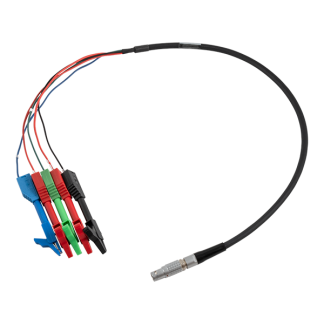
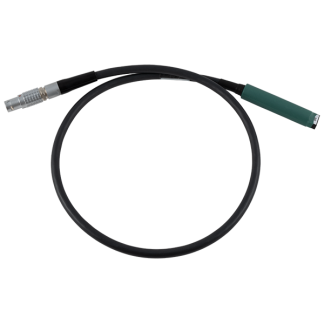
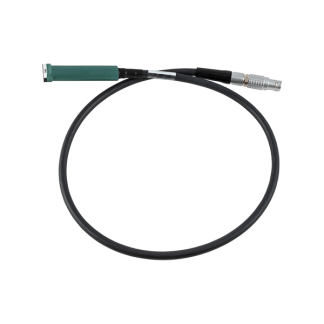
mStat Cable connector for uStat-i MultiX
SKU: DRP-I-CABSTAT
0,00 zloty
DRP-I-CABSTAT Kabel podłączeniowy (bi)potencjostatu DropSens do elektrod klasycznych
Elastyczny przewód pełniący funkcję interfejsu między klasycznymi elektrodami z 2xWE a (bi)potencjostatami DropSens z funkcją Impedancji.
| Ilość WE | 2 |
| Złącze elektrod | 4 mm banany, 4 mm krokodylki |
| Pasuje do | µStat-i-400, µStat-i-MULTIXm µStat-i-MXONE, µStat-i-MXONEP |
| Length | 60 cm |
Metrohm Dropsens offers access to application notes and publications describing the applications of electrodes, potentiostats/galvanostats, and SPELEC systems in various fields of electrochemical and spectroelectrochemical research. Below is a selection of the available application notes.
To familiarize yourself with all available materials, please visit the website Metrohm-Dropsens.
 Baseline subtraction: easy correction of Raman spectra using DropView SPELEC.
Description of the "Baseline correction" tool in the analysis of Raman spectra.
Automeasurement tool: fast procedure for extracting the information in DropView SPELEC
Description of the "Automeasurement" tool for Raman spectra analysis,
DropView solutions for treatment of electrochemical and optical results
Description of how various data analysis tools work.
UV-Vis spectroelectrochemical cell for conventional electrodes
Spectroelectrochemical study on conventional electrodes using REFLECELL-C.
The carbon battle characterization of screenprinted carbon electrodes with SPELEC RAMAN
Characterization of different types of carbon electrodes using SPELEC RAMAN.
Easy detection of enzymes with the electrochemical-SERS effect
Raman spectroelectrochemical analysis of aldehyde dehydrogenase and cytochrome c.
Luminescence spectroelectrochemistry of [Ru(bpy)3]2+/3+ in semi-infinite diffusion regime
Luminescence spectroelectrochemistry study using FLKITSPE.
Hydrogen permeation with a single instrument according to ASTM G148
Hydrogen permeability study using STAT-I-MULTI4 and HCELL.
Using a portable standalone system for easy fermentation monitoring
Using the DROPSTATPLUS electrochemical reader and LACT10 sensors to detect lactic acid in beer.
Ion-selective electrodes based on screen-printed technology
Overview of information on ion-selective electrodes.
Measuring ionic conductivity using screen-printing technology
Conductivity study on 11COND electrodes using the EIS technique.
Spectro-electrochemiluminescence study of simultaneous emission from two luminophores
Study of luminescent properties using SPECTROECL systems.
How to use screen-printed electrodes (SPE)? 

Using a micropipette, apply a 60 µL drop, ensuring that it covers the entire three-electrode system (working, auxiliary, and reference electrodes).
Alternatively, the electrode can be immersed in the solution – just make sure that all three electrodes are in contact with the solution being tested.
Use the cables and box connectors appropriate for your potentiostat, e.g. CAC or DSC4MMH.
Do I need to pre-treat the electrodes?
The electrodes are ready to use, so there is no general pretreatment protocol. Screen-printed electrodes (SPE) avoid the time-consuming polishing required for classic solid electrodes before measurement.
However, electrochemical pretreatments are used in some applications. For example, for gold electrodes, a procedure involving several cycles in a 0.1 M sulfuric acid solution over a range of 0–1.6 V at a scan rate of 100 mV/s can be used.
Can SPE electrodes be used more than once?
SPE electrodes are designed as disposable platforms for developing various (bio)sensors. We recommend using them as consumables, as this is how we guarantee their best performance.
In specific cases, it is possible to reuse electrodes. The number of times they are used depends on many factors and should be determined individually during the optimization process.
What electrode substrates are available?
Most electrodes are manufactured on a ceramic substrate (alumina). White and transparent plastic (PET), PCB (FR4), and glass (Pyrex) substrates are also available.
Manufacturing electrodes on other materials can be considered upon request as part of a custom product.
What are the differences between AT and BT gold electrodes?
The difference between AT and BT electrodes lies in the different gold pastes used for printing. AT paste is baked at a high temperature (approx. 900°C), while BT paste is baked at a low temperature (approx. 150°C).
Both types were developed to provide a wider range of electrochemical properties for gold electrodes. In practice, this means that the AT and BT models may exhibit similar or different behavior depending on the specific experiment, i.e., the redox system being studied.
There are no clear criteria describing the properties of each type, as they depend on the specific sensor, the electrode itself, and the redox molecule used. For example, ferricyanides exhibit better electron transfer at AT electrodes than at BT.
In general, it can also be said that AT models sometimes have better reproducibility, while BT models are often chosen for biosensor development.
To select the appropriate electrode, you can use the DRP-AUMIX kit, which contains a mixture of gold electrodes fired at high and low temperatures.
Are SPE electrodes suitable for use in organic solvents?
SPE electrodes are designed to work in solutions water, however, under certain conditions they are resistant to some organic solvents.
If you plan to use SPE in organic solvents, please contact the manufacturer for information about the tests performed.
What temperature can Metrohm DropSens electrodes withstand?
It depends mainly on the type of substrate and the presence of a dielectric layer (green polymer):
Ceramic SPE with dielectric layer: up to approx. 100 °C
Ceramic SPE without dielectric layer (e.g. IDEAU200): up to approx. 800 °C
Electrodes on plastic substrate: up to approx. 80 °C
Glass-based electrodes: up to approx. 450–500 °C
What are the main differences between the Ag pseudo-reference electrode in SPE and the Ag/AgCl (3 M KCl) reference electrode?
Standard Metrohm DropSens screen-printed electrodes (SPEs) utilize a silver pseudo-reference electrode. Compared to a classic Ag/AgCl reference electrode, a potential shift of approximately -131 mV is observed in 0.1 M KCl solution.
If an Ag/AgCl pseudoelectrode is required, catalog models are available (e.g. DRP-11L and DRP-C11L).
Any model from the catalog with an Ag electrode can also be made using Ag/AgCl paste as a custom model.
What is the thickness of the working electrode in thick-film electrodes?
The metal is deposited on a ceramic substrate using the PVD method, obtaining a thin layer of pure metal with a thickness of approximately 1 µm.
The roughness of these electrodes corresponds to the roughness of the substrate, i.e. Ra ≈ 1 µm.
What is the thickness of the PEDOT layer in P10 electrodes?
The PEDOT layer applied by screen printing has a thickness of 3 ± 1 µm.
What is the thickness of G-IDE electrodes?
Brush electrodes on a glass substrate are fabricated by photolithography. The resulting layers have thicknesses ranging from 150 to 200 nm.
What is the adhesive layer in IDE electrodes on a glass substrate made of?
To achieve better adhesion of gold or platinum to the glass substrate, a thin layer of titanium is applied before sputtering the gold or platinum.
Are Streptavidin electrodes stable at room temperature?
Yes, these electrodes are stable at room temperature. However, it is recommended to store them at 2–8°C in a refrigerator where temperature conditions are well-controlled.
Check the electrode description to see at what temperatures they should be transported and stored.
Which electrodes are most useful for spectroelectrochemical experiments in transmission geometry?
For transmission analysis during electrochemical testing, it is recommended to use transparent working electrodes designated PEDOT10, COTE10, ITO10, or AUTR10. Various materials—PEDOT, carbon, indium tin oxide (ITO), and transparent gold—allow for obtaining a good transmission signal.
All of these electrodes can be tested by selecting the OTEMIX mixed kit.
Is there a maximum flow limit when working with TLFCL type SPE electrodes?
The cover is very stable, and high flow rates can be achieved. For example, a flow rate of 4 ml/min can be used during measurement. However, the optimal flow rate should be determined experimentally, as it depends on the specific measurement system.
Can I update the DropView software?
Users of DropSens instruments are entitled to receive software updates free of charge for an unlimited period of time.
What are the computer requirements for working with Metrohm DropSens potentiostats?
Minimum requirements:
Screen resolution 1024 × 768 (1280 × 1024 recommended)
64-bit processor (x64)
RAM 16 GB (32 GB recommended)
I see a "Peripheral Configuration" option in the software – what does this mean?
Digital and analog inputs/outputs are configured in this menu; the window that appears allows you to enable or disable selected programmable I/O pins (PIOs).
Can I perform battery charge/discharge experiments on DropView 8400?
Yes, it is possible and very simple using the "Manual Control Script" which allows you to create a current charge/discharge profile with cut-off values.
The DropView 8400 software has a "Manual Control Script" option with various commands available for this and other applications.
Do Metrohm DropSens instruments have a floating mode option?
Floating mode can be achieved both when operating on battery power and when connected wirelessly to a computer; therefore, all instruments with a wireless option are suitable for operation in these conditions.
If you need to conduct long experiments in floating mode, you can use the USBFLOATING cable, which allows you to switch the instrument to floating mode (compatible with: μStat 300, μStat 400, μStat-i 400, μStat-i 400s, μStat ECL).
The μStat-i MultiX can optionally be configured with floating channels.
What is the maximum number of points per experiment that can be saved in DropView?
The maximum number of data points is 65,000.
Why is wireless connection useful in a potentiostat?
The wireless connection in our devices is very useful for wireless data transfer and remote control. You can place the instrument inside a glove box, optical box, etc., while control is performed from a computer.
What are DropStat / DropStat Plus readers?
DropStat and DropStat Plus are readers designed primarily for the stage where the sensor has already been developed and optimized. They are programmed according to user specifications and display the concentration of the analyte for which the electrochemical sensor was developed. DropStat and DropStat Plus will display the final concentration values for the developed sensor. Based on the calibration curve, they can display values such as peak height, peak position, peak width, peak area, current, or directly the concentration.
They are ideal as proof of concept in the final design stage, but are primarily intended for OEM production in large series and subsequent commercialization.
If the sensor is still in the research phase and not optimized, it is recommended to use a standard potentiostat for development work.
To program such a reader, contact the manufacturer (info.dropsens@metrohm.com), who will provide a questionnaire to complete. The main required information includes: electrochemical technique parameters, a calibration curve, and a sample signal obtained.
I have my own optical cuvette and fiber optics. Are they compatible with SPELEC instruments?
SPELEC instruments are very versatile and compatible with many systems available on the market.
The connectors in SPELEC are of the SMA 905 standard, so any optical fiber with such a connector will be compatible.
However, please note that a wide range of spectroelectrochemistry accessories are available, including targets and optical fibers offered by Metrohm DropSens.
Do you offer SERS substrates for Raman spectroelectrochemistry?
Because Raman scattering is inherently weak and of limited use for low-concentration samples, SERS is widely used in a variety of applications. It involves amplifying the Raman signal through the interaction of molecules with metallic surfaces.
Metal printed electrodes (SPEs) are promising SERS substrates because they are available in a variety of materials, such as gold, silver, and metal nanoparticles. They are readily available, inexpensive, disposable, and require only a small sample volume.
Examples of recommended SPEs are the C013 model with a silver working electrode and the 220BT with low-temperature hardened gold.
What is the distance between the RAMANPROBE probe and the electrode surface?
The RAMANPROBE has a focal length of 7.5 mm, allowing it to be adapted to a variety of measurement setups. The RAMANCELL is designed with this in mind, but is supplied with a variety of spacer plates to optimize the distance between the probe and the electrode surface, thus easily improving the Raman signal.
Other RAMANPROBE probes with different specifications can be supplied on request.
How should I clean the RAMANPROBE?
RAMANPROBE is a probe non-immersion, so it should be cleaned gently with soft paper and ethanol.
The RAMANPROBE in an immersion version can be supplied upon request.
Can I use my potentiostat with CONNECTOR96X?
The CONNECTOR96X is intended for use in conjunction with the µStat 8000/P multi-channel instrument and the SYNCONN96X with the DIOC8000SYNC96 cable as a high-throughput screening platform capable of reading 96 wells in the SPE 96X format.
At the same time, CONNECTOR96X is a universal connector that allows you to connect any instrument via 2 mm banana cables.
If you want to use your instrument also in combination with SYNCONN96X to automate reading, please make sure your instrument allows script programming and contact us so we can make a suitable DIO cable.
What is the MEMB product intended for?
Designed for small-volume analyses involving a three-electrode system (approximately 15 µL), the mesh is made of a monofilament polyamide fabric that fits perfectly into an electrochemical SPE cell.
What is the volume and flow rate of the DRP-FLWCL flow cell?
The volume of the electrochemical chamber defined by the O-ring in the flow cell is 8 µl.
The DRP-FLWCL was tested at flow rates up to 6 ml/min.
What electrode connectors should I use between (SPE) and any potentiostat?
You can work with SPE in two ways: by applying a drop or by immersing the electrode in the solution.
- Using a micropipette, apply a 40–50 µL drop to cover all three electrodes (auxiliary, reference, and working). You can use the DSC connector for this purpose (as shown).
- For working in solution, a CELL cell (5–8 mL volume) can be used to cover the entire three-electrode system, in combination with a CAST cable (using the DropSens potentiostat) or a CAC cable (using any other device).
What is graphene and graphene oxide?
Graphene is an allotrope of carbon with a structure of a single layer of sp² hybridized carbon atoms. It is a single layer of carbon atoms connected in a hexagonal (honeycomb) crystal lattice.
Graphene oxide It is considered a graphene precursor or graphene material in its own right, as it is graphene functionalized with oxygen groups. It has lower electrical conductivity than graphene.
What are enzyme substrates used for?
DropSens provides enzymatic substrates for alkaline phosphatase. Upon hydrolysis, these substrates produce electrochemically active products, such as p-aminophenol from p-aminophenylphosphate, hydroquinone from hydroquinone diphosphate, and paracetamol from phosphorylated paracetamol.
Thanks to the formation of these electroactive products, it is possible to obtain high sensitivity of measurements.
Metrohm-DropSens offers a wide variety of instruments and accessories, all with dedicated DropView software. We encourage you to download the manual for your instrument.